Farm Harvest Watercolor Cliparts for Rustic Embroidery
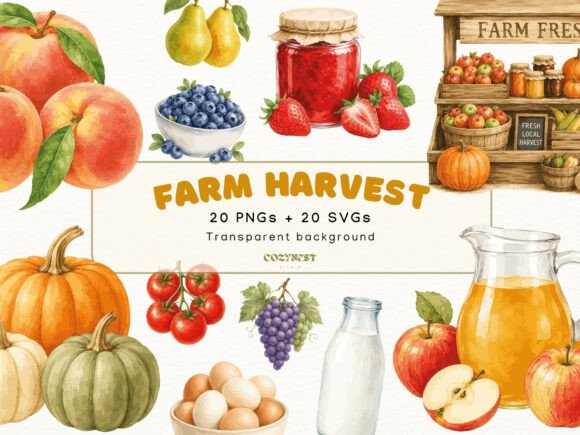
When a new embroidery file lands in my library, I immediately think about how it will translate from screen to stitches. I’m looking at the Farm Harvest Watercolor Cliparts, Rustic bundle right now, considering it for a custom tote bag project for a local farm shop. My first impression is one of gentle abundance. This isn't a sharp, graphic collection; it feels soft, welcoming, and inherently handmade. The watercolor style suggests a mood of organic charm, which is perfect for projects aiming for that authentic, countryside aesthetic.
The Natural Fit for Stitched Projects
This collection’s theme—seasonal produce and rustic pantry staples—isn't just a graphic; it's a story. For embroidery designers and small business owners, that story translates directly into product appeal. Imagine these designs on a linen apron for a cooking enthusiast, or as a delicate motif on a baby blanket for a nursery. The illustrative quality means it's not just a logo; it's a decorative accent that adds perceived value to a handmade product.
From a practical stitching perspective, the watercolor aesthetic typically implies softer edges and blended colors. In embroidery, this can be beautifully rendered with fill stitches and careful thread color selection. I’m thinking these designs would excel on items where a gentle, artistic touch is preferred: pillow covers, tea towels, or as a focal point on a sweatshirt for a cozy, autumn feel. For Etsy sellers and creative entrepreneurs, this visual personality can elevate a simple product into a giftable, boutique-ready item.
Where These Designs Shine and Where to Be Cautious
Let's talk real-life application. I envision the Farm Harvest Watercolor Cliparts working wonderfully on stable, medium-weight fabrics like canvas for tote bags, cotton for kitchen towels, or fleece for blankets. The designs likely have areas of detail that will need a good stabilizer to hold their clarity, especially if you're working on apparel like t-shirts or sweatshirts. For caps or curved surfaces, you'd need to carefully assess the design's layout—larger, centralized motifs would be better than elements with tiny, intricate corners that might get lost on a curved seam.
Dark fabric is always a consideration. A watercolor style often uses lighter hues. If you’re planning to stitch this on a dark denim jacket or a black sweatshirt, you must test thread color contrast thoroughly. You might need to adjust the recommended colors to ensure the design pops without losing its soft, watercolor mood. Similarly, on very textured fabrics, the subtle blends might not read as clearly, so a smooth fabric is ideal.
For commercial embroidery projects or for craft businesses producing multiples, the stitch density is a key factor. A design with very dense fills can be time-consuming and heavy on thinner fabrics. My advice is always to stitch a sample on scrap fabric first. This lets you check not only the clarity of small details but also how the design feels on the actual material you plan to use for your final product—whether it's a personalized gift or a line of merchandise for your small shop.
Turning Graphics into Stitched Success
Using a graphic bundle like this for embroidery means thinking about transition. These are illustrations, but your output is thread. This affects customer trust and professionalism. A buyer purchasing an embroidered pillow with this design is buying the craftsmanship of the stitch, not just the digital art. Therefore, the quality of your finished product—clean stitches, proper hoop size choice, and thoughtful placement—must match the beauty of the original design asset.
For digital product sellers who might be using these cliparts in printable mockups or as part of their own digital embroidery file creations, the licensing terms are paramount. Always confirm the license before selling any finished items or derivative digital products. Furthermore, testing the design in a black and white mockup can help you see the pure shape and layout, stripping away the color to judge its structural suitability for stitching.
A Practical Path from File to Finished Product
Here’s how I would approach using the Farm Harvest Watercolor Cliparts, Rustic for a real client project, like the farm shop tote bag:
- Context First: The product is a canvas tote. The design needs to convey rustic, fresh, and handmade. This bundle’s theme aligns perfectly.
- Selection: I’d choose one or two of the more iconic produce motifs rather than a crowded collage, ensuring the embroidery remains legible and visually balanced on the bag.
- Testing: I’d stitch it on scrap canvas first. I’d check how the suggested thread colors look on my actual material and observe the stitch density to ensure it doesn’t make the canvas too stiff.
- Application: Using an appropriate stabilizer, I’d embroider the design, paying close attention to the areas that mimic watercolor blends—these might use fill stitches with color changes to achieve that soft effect.
- Final Evaluation: Does the stitched result capture the charming, abundant mood of the original graphics? Does it feel like a high-value, professional addition to the tote? For my client’s customers, that’s the ultimate test.
In conclusion, the Farm Harvest Watercolor Cliparts, Rustic offers a strong foundation for embroidery projects targeting a rustic, warm, and artisan market. Its success hinges on the maker’s skill in translating its illustrative quality into a tangible, stitched product with clarity and care. For crafters, apparel decorators, and creative entrepreneurs, this bundle can be a wonderful asset for creating products that feel personal, giftable, and distinctly handmade.