A Simple Toolkit for Artistic Embroidery Projects
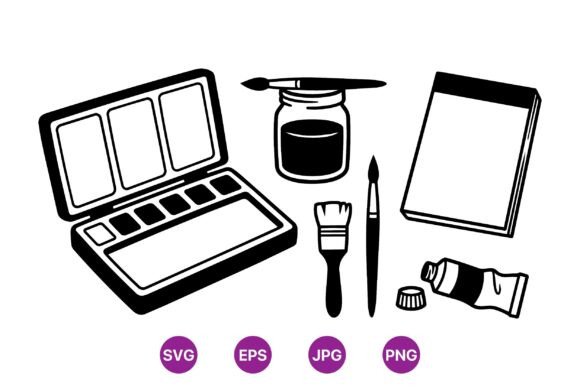
When a new embroidery file lands on my desktop, I don't just look at the preview. I imagine it stitched. I think about the fabric it will live on, the hands it will pass through, and the eyes that will finally see it. Today, that file is Watercolor Painting Tools Clipart. It's a minimalist black and white vector set of artistic tools—a palette, brushes, an ink jar, a sketchbook. My first task is to judge its real-world potential beyond the screen.
The Quiet Mood of a Clean, Line-Based Design
The immediate impression is one of peaceful clarity. There's no noise here. The shapes are defined by simple lines, creating a sense of order and calm. This isn't a loud, colorful statement; it's a subtle nod to creativity itself. The visual personality is thoughtful and refined. For embroidery, this mood translates beautifully into projects meant for reflection or appreciation—a gift for a mentor, a piece for a serene space, or branding for a boutique that values clean aesthetics.
I can already see it belonging on the corner of a linen pillow cover in a reading nook, or as a small, deliberate detail on a canvas tote bag meant for carrying sketchbooks. The theme is universally understood but presented with a minimalist grace that elevates it from generic clipart to a considered design element.
Where This Design Stitches Up Perfectly
Let's talk application. I'm picturing a specific scenario: a custom embroidered apron for a painting instructor. The client wants something professional but not overly decorative. This Watercolor Painting Tools Clipart design, placed neatly near the pocket, would be perfect. The clean lines would stitch out with excellent clarity on the apron's cotton twill. It communicates the purpose without clutter.
More broadly, this design performs well on substrates where simplicity is an advantage. On a baby item, like the cuff of a little knit sweater, the small, peaceful motif feels gentle and artistic. On a sweatshirt or t-shirt, it offers a modern, less literal alternative to typical graphic prints. For small business merchandise—think tea towels, tote bags, or simple caps for a local art supply shop—it acts as clean, recognizable branding. It also integrates seamlessly into digital product previews and printable mockups for Etsy sellers offering handmade journals or craft kits, because the vector-based simplicity renders clearly at any size.
As a personalized gift, say a holiday present for a watercolor enthusiast, embroidered onto a kitchen towel or pillow cover, it feels specifically chosen and crafted. The minimalist approach avoids being kitschy, which increases its perceived value and giftability. For the craft business owner, using such a clear, professional-looking design enhances customer trust and brand consistency. It looks intentional.
The Practical Considerations for Stitching Success
Now, the designer's notes from my experience. A design like this, with its peaceful and clean line work, promises good stitching clarity, but that depends entirely on execution. Here’s how I’d approach it for a real embroidery project.
First, the detail level is moderate. The individual brush bristles, the sketchbook corners, the palette wells—these are defined by lines, not dense fills. This is excellent news for stitch density and fabric integrity, especially on lighter or more textured fabrics. It likely won't create a heavy, stiff patch on the back of a delicate item. However, those same fine details require attention.
Always test on scrap fabric first. Use the same material you intend for the finished product. I'd stitch a sample on a piece of canvas for a tote bag, or on a swatch of sweatshirt fleece, before committing. This allows you to check thread color contrast thoroughly. While the design is presented in black and white, your thread choice on, say, a dark navy fabric might need to be a bright white or a light grey to maintain that clean look. On light fabric, a true black or a dark charcoal might be necessary to achieve the intended minimalist sharpness.
Review the small details in your test. Are the tight corners of the ink jar stitching cleanly without jumping? Does the fine line of the brush handle remain distinct? This will inform your choice of hoop size and stabilizer. For smaller applications, like on a cap or a baby bib, you need to ensure the design scale is adjusted so that the finest elements don't get lost or become blobs of thread. A good stabilizer is non-negotiable here to keep those lines precise.
Spaces Where This Design Requires Extra Care
While versatile, Watercolor Painting Tools Clipart should be used carefully in certain contexts. On highly textured fabrics like thick wool or loose linen, fine lines can get lost in the weave. On stretchy fabric like jersey knit, without proper stabilization, the lines might distort. Embroidering it on dark fabric requires impeccable contrast planning—a simple black thread on dark grey might vanish.
Consider the product's lifecycle. For items needing frequent washing, like kitchen towels or aprons, the longevity of those clean lines depends on using quality thread and a stable base. Also, on curved surfaces like caps, the layout might need slight repositioning so that the horizontal sketchbook, for instance, doesn't look skewed when worn.
Finally, a crucial note for digital product sellers and commercial embroidery projects: Confirm the licensing before selling finished items. The product description mentions it's an illustration from the Graphics category. Understand the terms. Can you use it for personal and commercial projects? Can you sell the physical embroidered patch or custom apparel you make with it? This is the bedrock of professionalism and protects your craft business.
The Final Stitch: Elevating Your Project's Appeal
When you choose an embroidery file well, it does more than decorate a surface. It enhances the entire object. This design, by virtue of its peaceful and clean aesthetic, directly boosts the visual appeal and handmade presentation of your work. It doesn't scream; it whispers quality. For a buyer browsing an Etsy listing or seeing a product at a craft fair, that whispered quality can be more powerful than a shout. It suggests thoughtfulness.
In my judgment, Watercolor Painting Tools Clipart is a robust design asset for makers who value subtlety. It’s a toolkit, literally and metaphorically, for creating embroidered items that speak to an artistic, mindful audience. Its strength is its restraint. By pairing it with the right fabric, thread, and purpose, you can create a finished product that feels both personal and professionally crafted. Just remember to do your practical homework—test, check, confirm—so that the clean lines on your screen become clean, beautiful stitches in the real world.