A Designer’s Review of a Classic Toy Embroidery Design
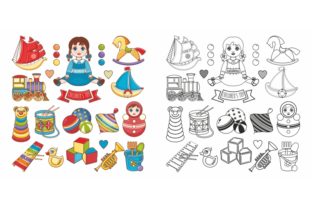
When I opened the ‘Children s Toy. Coloring Book Page’ embroidery file, my first impression was a warm sense of nostalgia. The design is a charming collage of classic playthings: a drum, pyramid, beach balls, a yellow duck, cubes, a horn, a doll, a boat, a train, a bundle, a tumbler, a peg toy, and a roly poly humming top. It feels whimsical and hand-drawn, like a page lifted from a vintage coloring book. The layout is playful and well-balanced, with a personality that leans more towards sweet and timeless than modern and sleek.
The Perfect Project for This Vintage Toy Collection
This design immediately made me think of personalized gifts and boutique-ready products. I pictured it on the back of a lightweight cotton sweatshirt for a child, or as a standout feature on a canvas tote bag for a craft-loving parent. Its theme is universally appealing—it taps into that shared memory of simple, joyful toys. For a real project, I’m considering it for a custom baby blanket or a set of embroidered pillow covers for a nursery. The ‘coloring book page’ aesthetic gives it a friendly, approachable look that would resonate well in a handmade shop or on Etsy, where buyers are looking for that personal, artistic touch.
Where This Design Shines in Embroidery
The strength of this graphics-based design is its versatility. The individual elements are clear and distinct, making them excellent candidates for applique work if you wanted to introduce different fabrics. As a straightforward embroidery file, it would translate beautifully onto natural fabrics like linen tea towels or cotton aprons—items that carry that wholesome, handmade feel. For a small business owner, this design could become a core asset for a line of children’s apparel or nursery decor. Its classic nature means it won’t feel dated, offering good value for ongoing use in your craft business.
For apparel decorators, a single element like the yellow duck or the train could be isolated for a smaller, quicker project on a baby cap or the corner of a toddler’s t-shirt. The overall composition, however, is best suited for a larger statement piece. On a tote bag or a pillow cover, the full collection of toys creates a delightful, engaging scene that tells a story. This enhances the product’s perceived value and giftability significantly.
Points for Careful Consideration Before Stitching
While the design is charming, its success depends on mindful execution. The ‘coloring book page’ style implies outlines and details. Some elements, like the tiny horn or the details on the roly poly, will require close attention to stitch density and clarity. On textured fabrics like some blankets or sweater knits, these fine details might blur. I would not recommend this for very small hoop sizes; cramming all these elements into a tiny area would sacrifice clarity and could lead to dense, stiff stitching.
Dark fabric backgrounds pose a challenge. The design’s light, playful mood is best conveyed with a well-chosen thread palette that offers strong contrast. Testing on scrap fabric first is non-negotiable here. Similarly, on curved surfaces like caps, the larger, spread-out layout might distort. This is a design for flat, stable surfaces. For products that need frequent washing, like kitchen towels or baby clothes, ensure you’re using durable threads and proper stabilizer to keep the details intact over time.
How This Design Influences Your Brand and Customer Trust
Using a design like ‘Children s Toy. Coloring Book Page’ effectively can elevate your handmade presentation. Its coherent, artistic theme speaks to a thoughtful selection process, not just a random graphic. For creative entrepreneurs, it helps build brand consistency if you’re focusing on nostalgic, family-friendly, or child-centric products. When a customer sees this on a finished product, it creates recognition—they understand the theme immediately, which builds engagement and trust. It looks professional because it’s a complete, well-composed idea, not a fragment.
For digital product sellers offering the embroidery file itself, this design is a strong commercial embroidery asset. Its clear use-case for gifts and apparel makes it easy to market. Creating printable mockups showing it on a tote or sweatshirt would showcase its potential beautifully to potential buyers.
Practical Notes From the Embroidery Hoop
Before running this machine embroidery design on a final project, here are my grounded recommendations. First, always test on a scrap of your intended fabric. This will reveal how the stitch density behaves and whether any small details, like the doll’s features or the train wheels, need slight adjustment. Review your thread color choices carefully; a palette that mimics soft coloring book colors might work better than stark, bright ones.
Since specific details like exact stitch count or file formats weren’t provided in the description, confirm these with the file you receive. Check the licensing terms clearly before using it for commercial projects or selling finished items. Does it allow for resale of embroidered products? Always clarify.
For best results, use a stabilizer appropriate for your fabric, especially if it’s stretchy or thin. I’d also advise checking the design in a black and white mockup to evaluate its form independently of color, and comparing how it looks on both light and dark background mockups. This ‘Children s Toy. Coloring Book Page’ design has the potential to be a standout in your portfolio, but its success hinges on these practical, preparatory steps. It’s a design that rewards a careful, confident maker with a product full of charm and appeal.